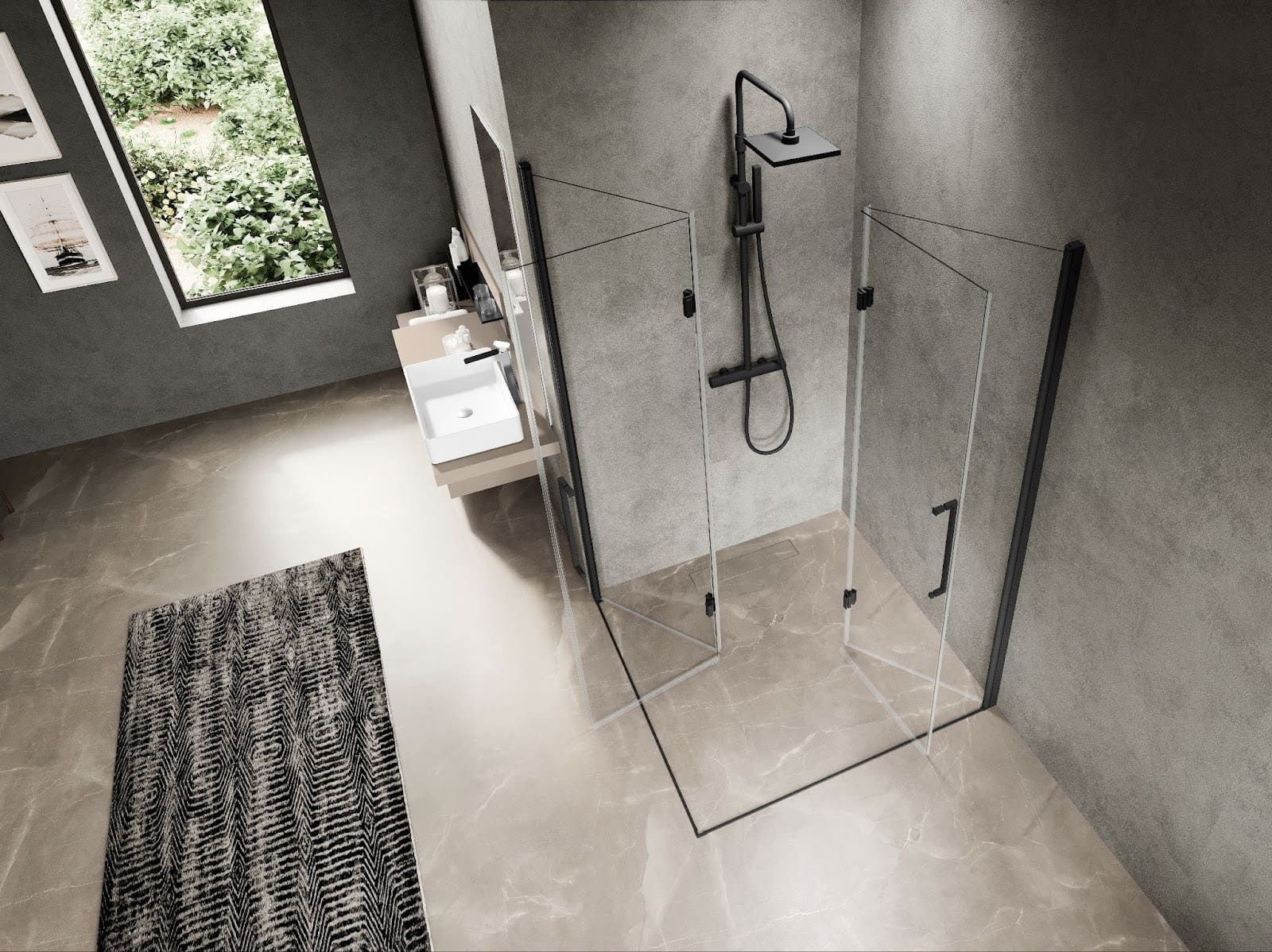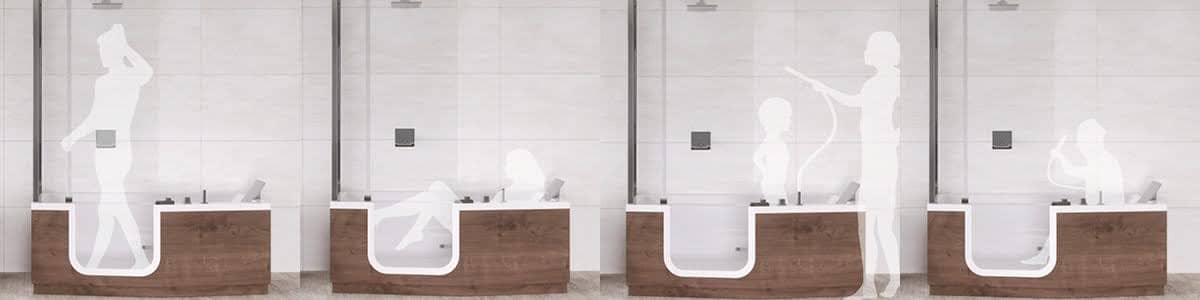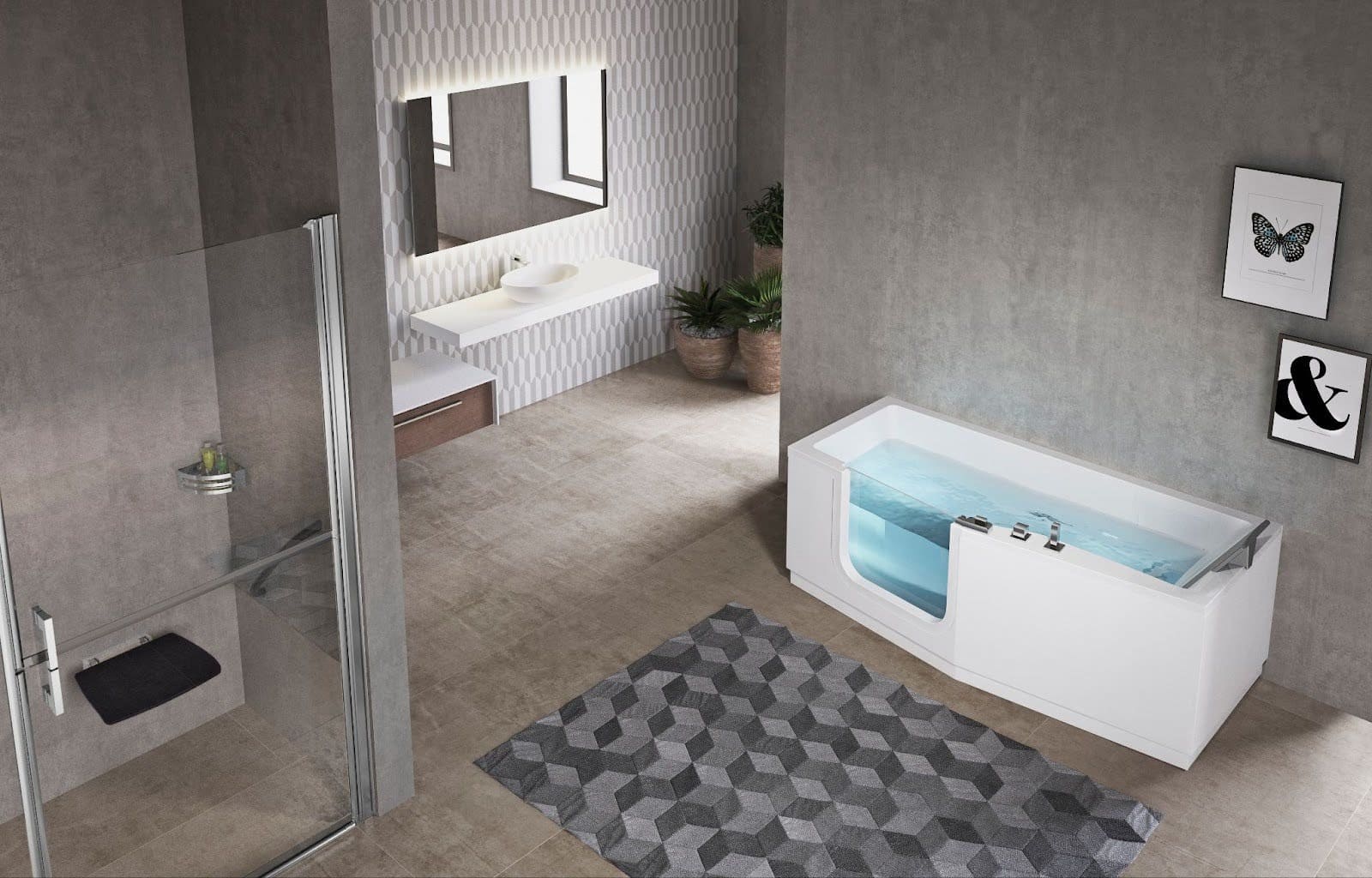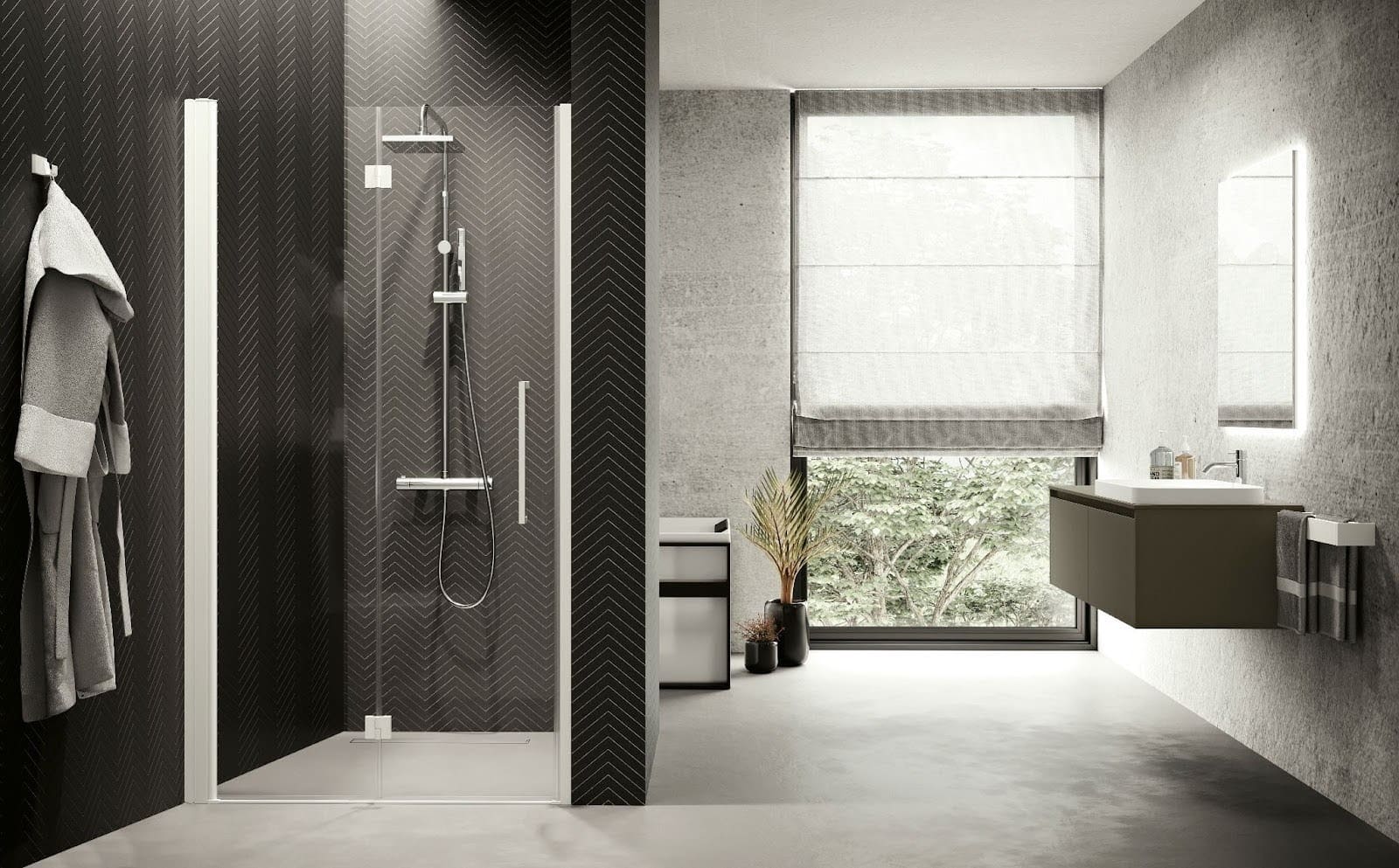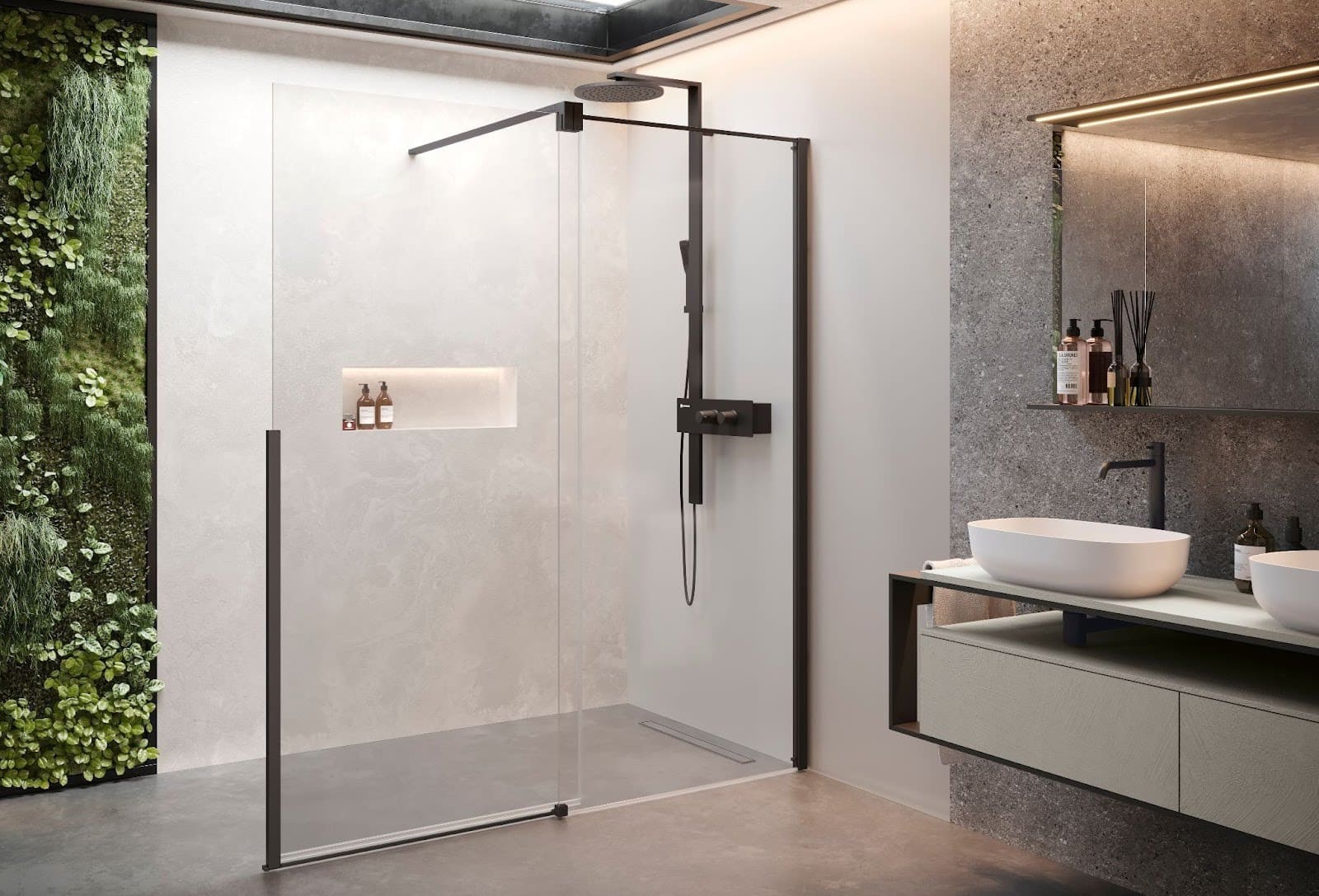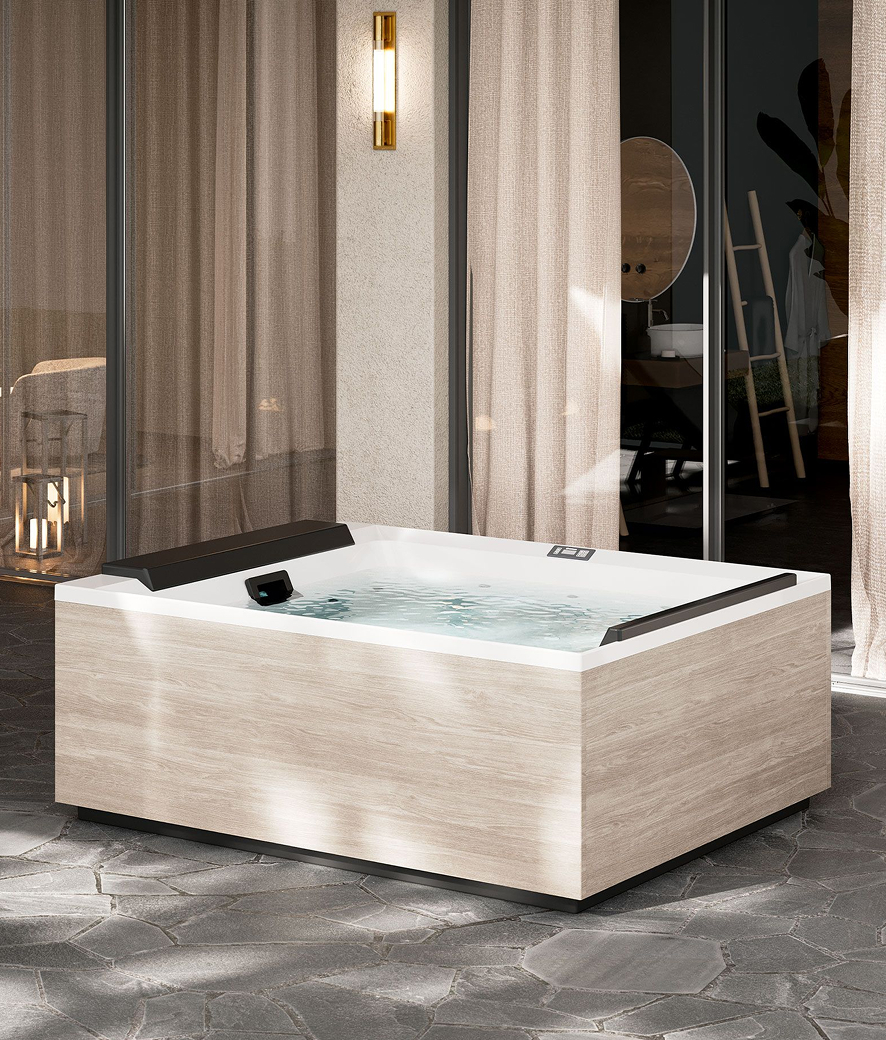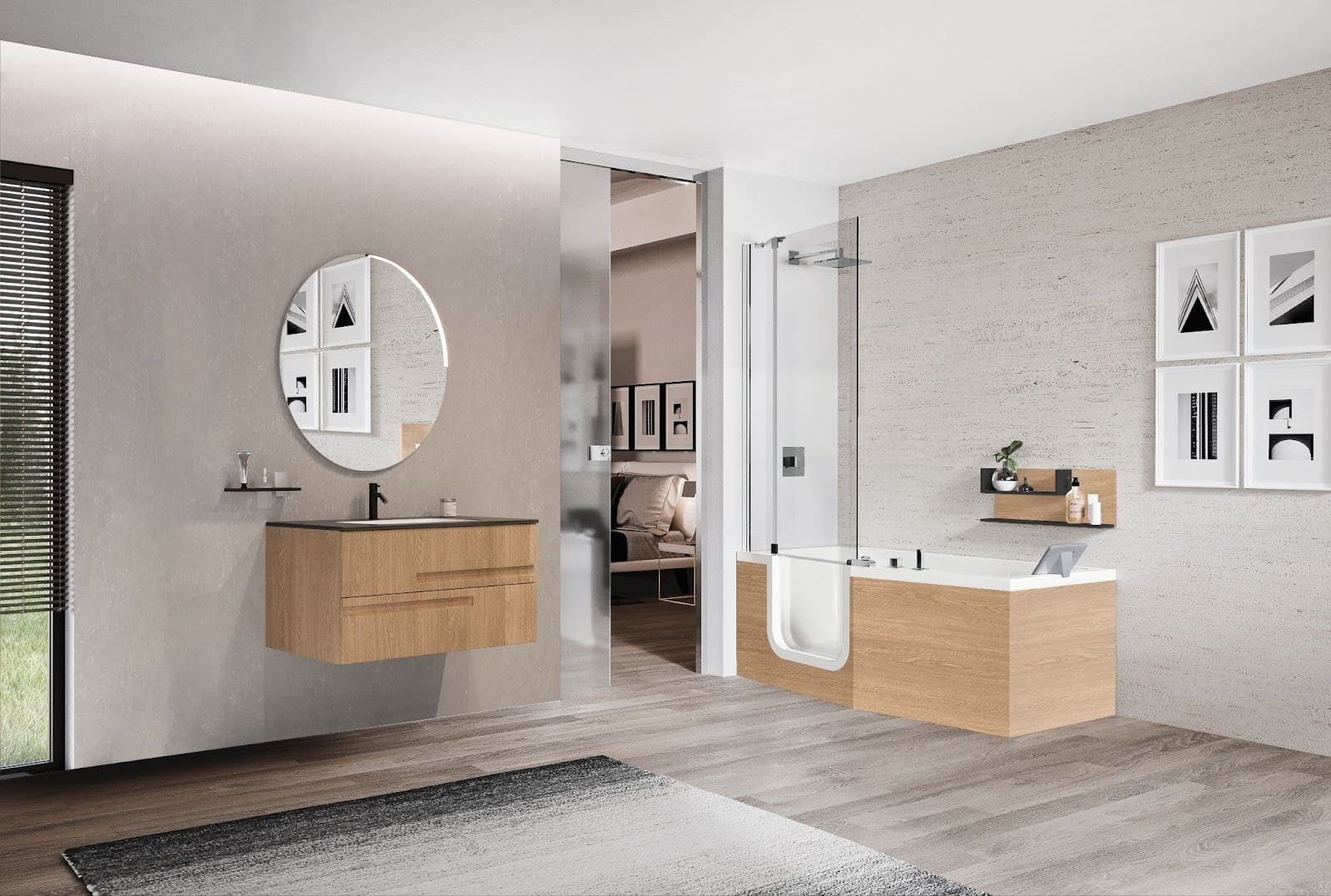
When we talk about an accessible bathroom, we mean an environment designed and equipped to be safe, comfortable and easily usable by anyone, regardless of age or motor skills. It is a barrier-free and risk-minimizing space designed to allow everyone –the elderly, people with disabilities, walkers, or wheelchair users– to independently and safely carry out their daily activities, such as entering the shower or bathtub for washing, increasing safety and minimizing the need for assistance.
The importance of accessibility in the bathroom is often underestimated, but using this environment can pose real risks for children or people with reduced mobility: wet and slippery floors, raised shower trays that are difficult to navigate, the edges of tubs, or narrow spaces that prevent safe movement. Obviously, there is no one-size-fits-all solution: every home is different in space and size, and each person has specific needs. Designing an accessible bathroom means carefully studying the available space, eliminating obstacles, installing more ergonomic bathroom fixtures and shower spaces, and smart accessories in the right location. Even a small or aesthetically dated bathroom can become accessible with targeted interventions and often simpler and cheaper than you think.
In this short guide, we offer you some useful tips to help you to transform your bathroom into a truly safe and accessible place, and choose the best solutions based on your needs and the characteristics of your environments.